COMMUNITY ACTION TEAM: CANAL
- Community Co-Lead: Alcohol Justice
- Nutrition & Wellness Program Lead Staff: Jesica Rodriguez
Canal Community – Equitable Food System Priorities
- Promote edible urban greening in the canal and identify underutilized land for community gardens to grow organic produce.
- Leverage expertise of those in the restaurant industry and community gardens to support a public market with a commercial kitchen and food trucks.
- Support an educational campaign around decolonizing food ways with local community leaders to increase fruit and vegetable consumption..
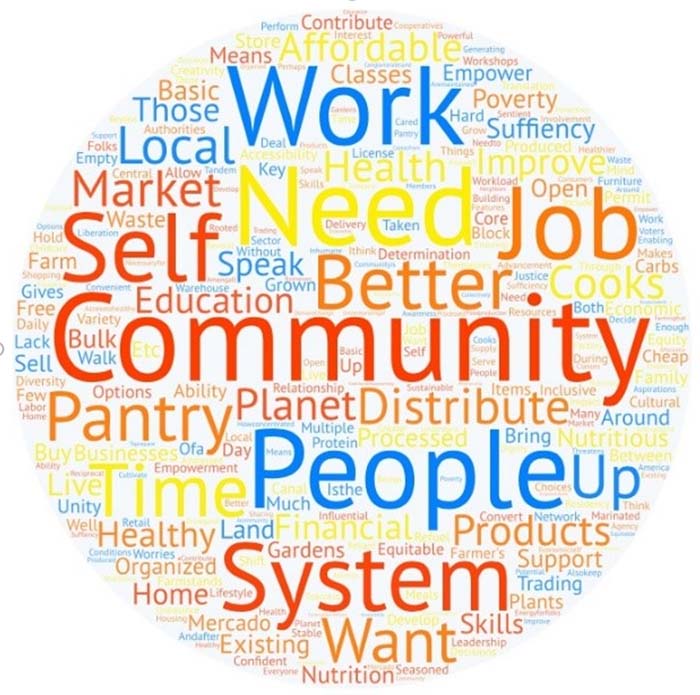
Canal Interview Results
- Financial insecurity, lack of time due to working multiple jobs, and limited access to affordable options are the largest barriers between community members and healthy eating.
- Healthy food will fuel people to work harder to better themselves and the community.
- Not bringing in something new but improving upon existing businesses and organizing home cooks into a mercado would be helpful.
- Community food systems mean taking care of those in need, a sustainable food system, and reclaiming cultural traditions.
- Community empowerment means a collective culture of inclusive and organized networks for mutual aid, uniting the community to hold power to make key decisions.
Food Production
Community gardens
Policies for land access to grow food
Increasing plant knowledge
Home garden start up kits
Plant fruit trees in public places
Food Transportation
Bulk buying clubs for groceries
Food truck start-ups
Food Processing
Commercial kitchen access
Improve school food
Traditional home cooks
Community cooking contests
Existing resource of people working in restaurants
Local cooks run training courses in kitchen spaces
Food Retail
Mercado open air market
Culturally relevant markets
Improve existing stores to have healthy and affordable options
Farmer’s Market
Food Consumption
Provide food gift cards to local businesses as incentives
Nutrition education and cross-cultural cooking
Healthy Marketing campaigns
Food Waste
Home garden composting program
Community Empowerment
Youth leadership programs
Community health/outreach workers
Decolonize perspective around Food as Medicine
Education/ training around food inequity in USA
Economic Development
Training programs to develop skills
Developing food co-operatives
Land access
Official work permissions for undocumented people
Recommendations for a Comprehensive Community Food System in the Canal
- Leverage expertise of those in the restaurant industry and community gardens to support a public market with a commercial kitchen and food trucks.
- Peer Health Promoters to build skills around healthy eating, decolonizing food ways, and healthy marketing.
