COMMUNITY ACTION TEAM: West Marin
- Community Co-Lead: West Marin Community Services
- Nutrition & Wellness Program Lead Staff: Jesica Rodriguez
West Marin Community – Equitable Food System Priorities
- Access to community gardens to grow fresh fruits and vegetables.
- Establishing land trusts for agricultural workers and other community members to own land to grow and procure food.
- Create a water catchment system to support people in growing their own food, even in drought conditions.
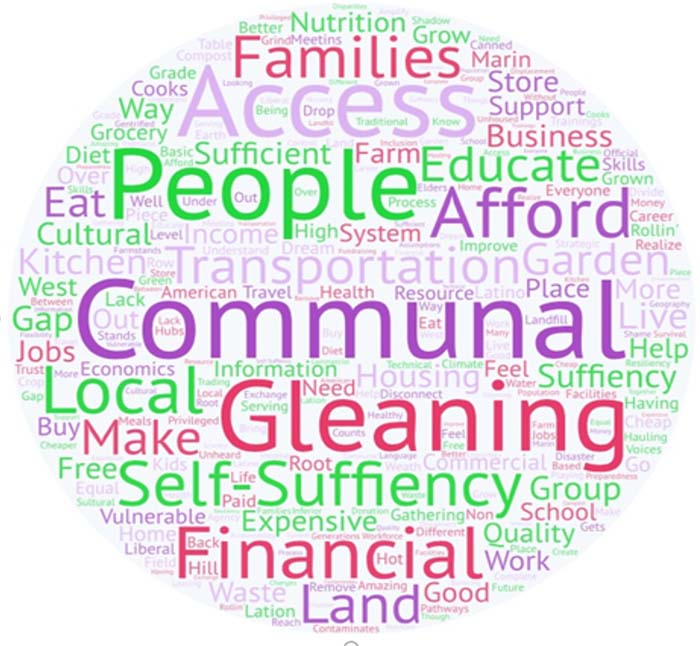
West Marin Interview Results
- Transportation, affordability, and cultural divides are the largest barriers between community members and healthy eating.
- Food plays a role of addressing political and power disparities, improving health for low-income families, and bringing people together.
- There is a desire for collective ownership over land and resources to support and expand mutual aid networks.
- Community food systems means local solutions to address wealth/racial disparities and reskilling the community to have agency over local foods.
- Community empowerment means interconnected skills for liberation, self-autonomy, and gathering different cultures.
Food Production
Food/ plant/ seed swap and sharing.
Water collect for drought conditions
People grow their own food
Food Transportation
No Recommendations provided
Food Processing
Community meals and gatherings
Commercial kitchen
Home caterers (become legit?)
Hot, free, donation based meals
Food Retail
EBT acceptance at restaurant and farm stands
Food Consumption
Education linking diet to mental well-being that is cross-culturally relevant
Food Waste
Gleaning collection and coordinate
Compost for livestock
Community Empowerment
Address wealth/race disparities
Cross-cultural community parties with food sharing and music
Economic Development
Land ownership/collective for ranch families to be able to work the land
Accountability tax to share the wealth
Training programs for business start up and social enterprises
Land trusts/lease for land access
Ensure living wages for labor (shortage)
Recommendations for a Comprehensive Community Food System in West Marin
- Engage in land trusts to secure land for agricultural workers to own and produce food
- Hold community gatherings and meal shares that are donation based with those with money sponsoring cooks
- Develop water catchment systems to coordinate community gardens for gleaning, food/plant/seed sharing.
